Source Tension Control Label Rewinding Machine for Apparel, Food, and Chemical
Compare 30 tension control label rewinding machines from verified suppliers in China. These automatic electric units support various materials like PET, PVC, and paper for apparel, beverage, and chemical applications with customizable cutting widths.
Key considerations
Products List


High Speed High Quality Paper Label Stock Slitting Rewinding Machine with CE
$40000.00 - $55000.00
Moq: 1


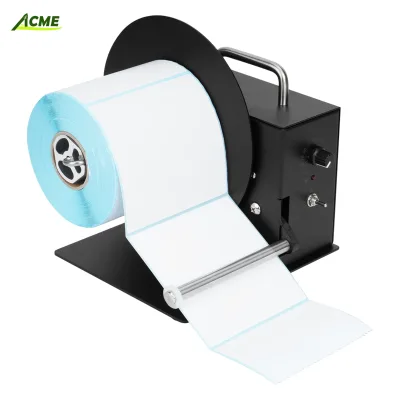

Comprehensive Sourcing Guide
Strategic Sourcing Guide for Tension Control Label Rewinding Machines
Understanding the Technical Landscape of Rewinding Systems
When sourcing a tension control label rewinding machine, buyers must first distinguish between general rewinding equipment and specialized systems designed for high-precision applications. The core keyword "tension control" implies a requirement for consistent web handling, which is critical when processing materials like PET, PVC, PC, BOPP, PE, PP, paper, and various sticker substrates. In the current market, these machines are often categorized by their specific function, such as "Labeling Rewinding Machine" or "Roll Slitter," though the underlying mechanism for tension management remains the primary differentiator.
The technical specifications of these units vary significantly based on the intended production volume and material width. For instance, observed models in the sector, such as the LTD-450 and LTD-400, demonstrate that machine dimensions can range from compact footprints like (700x650x700)mm to larger industrial configurations measuring (190015801380)mm. The maximum width of the web that a machine can handle is a critical specification; some units are rated for widths within 640 mm, while others may support different capacities. Buyers should verify the maximum unwinding diameter, which in some observed configurations reaches 1000mm, ensuring the machine can accommodate the roll sizes required for their specific production runs.
Speed is another paramount technical factor. The rewinding speed capabilities observed in the market range from 0-100 M/Min for standard labeling applications to 120 M/Min for high-speed roll slitting operations. The driven type for these machines is predominantly electric, with power consumption varying from low-energy units at 120W to heavy-duty industrial motors rated at 4 Kw. The choice of motor power directly correlates with the machine's ability to maintain tension under load, especially when processing heavier materials or running at higher speeds. Additionally, the transmission type, often described as rigid in high-precision contexts, ensures that the mechanical energy is transferred efficiently to the rollers without slippage, which is essential for maintaining the integrity of the label or film being processed.
Compliance, Certification, and Safety Standards
In the B2B procurement of industrial machinery, compliance with international safety and quality standards is non-negotiable. Buyers must verify that the machinery carries recognized certifications before finalizing a purchase. The most frequently observed certifications for this category of equipment include CE and ISO9001:2015. The CE mark indicates conformity with health, safety, and environmental protection standards for products sold within the European Economic Area, while ISO9001:2015 certifies that the manufacturer has a robust quality management system in place.
However, the presence of a certification mark on a product listing does not guarantee that every unit in a batch meets the standard. Buyers should request valid, current certificates from the supplier and verify the scope of the certification to ensure it covers the specific model being purchased. For example, while some machines are listed with "Ce and ISO9001:2015" certifications, others may only carry a "CE" mark. It is the buyer's responsibility to confirm which specific standards apply to the unit they are acquiring.
Safety features are also integral to the machine's design. The classification of the equipment, such as "Ultrasonic Label Cutting Machine" or "Roll Slitter," often dictates the specific safety protocols required. For machines utilizing cutting mechanisms, such as those with a "Round Knife Cutting" work method or "Disk" applicable processes, the presence of safety guards and emergency stop systems is critical. The structural design, including the "Cutting Part," must be engineered to prevent operator injury during the slitting or rewinding process. Furthermore, the use of materials like stainless steel in the construction of the machine not only ensures durability but also aids in meeting hygiene standards required for applications in the food and beverage sectors.
Cost Drivers and Pricing Variables
The pricing of tension control label rewinding machines is influenced by a complex array of factors, resulting in a wide observed range from $65 to $70,000. This significant variance is not arbitrary but reflects differences in machine capacity, automation levels, material construction, and included features. The lower end of the price spectrum typically corresponds to smaller, semi-automatic units or those with basic functionality, while the higher end reflects fully automatic production lines with advanced tension control systems, intelligent manufacturing capabilities, and larger physical dimensions.
Material composition is a primary cost driver. Machines constructed with stainless steel components are generally more expensive than those using standard carbon steel, as stainless steel offers superior corrosion resistance and longevity, particularly in chemical or food processing environments. The "Automatic Grade" of the machine also plays a crucial role; units classified as "Automatic" with features like "Auto Rectifying Controller System" command a premium over manual or semi-automatic models. The inclusion of intelligent manufacturing features, such as flexible production capabilities and non-flow production line configurations, further increases the cost due to the complexity of the control systems involved.
Other cost factors include the packaging and shipping requirements. Observed data indicates that machines are often packed in wooden boxes or wood bases and cases to ensure safe transport. The weight of the machine, which can range from lighter units to heavy industrial models weighing up to 1050 Kg, directly impacts shipping costs. Additionally, the origin of the machine, such as those manufactured in Xiamen, China, or other regions, influences the final price due to labor costs, local material availability, and export logistics. Buyers should also consider the lead time, which is typically around 10 days after order confirmation, as expedited shipping or rush manufacturing fees can add to the total cost of acquisition.
Typical Applications and Industry Compatibility
Tension control label rewinding machines are versatile tools designed to serve a broad spectrum of industries. The primary application areas include apparel, beverage, chemical, commodity, and food sectors. In the apparel industry, these machines are used to rewind fabric labels and tags, ensuring consistent tension to prevent wrinkling or distortion. For the beverage and food industries, the machines handle label rolls for bottles and packaging, where precision is vital to maintain brand image and product safety.
The chemical and commodity sectors utilize these machines for rewinding labels that may be exposed to harsh environments or require specific adhesion properties. The ability of the machine to process a wide variety of materials, including PET, PVC, PC, BOPP, PE, PP, and paper, makes it adaptable to different product requirements. For instance, the "Usage" specifications often list these diverse substrates, indicating that the machine's tension control system can be adjusted to handle the varying stiffness and elasticity of each material.
Furthermore, the classification of the machine as a "Roll Slitter" or "Labeling Rewinding Machine" suggests its utility in converting large master rolls into smaller, usable widths. This is particularly relevant in the machinery and hardware sector, where custom-sized labels or tapes are required for specific equipment or assembly lines. The "Applicable Process" of "Disk" cutting and the "Work Method" of "Round Knife Cutting" allow for precise slitting, which is essential for maintaining the quality of the final product. Buyers should evaluate their specific application needs against the machine's capabilities, such as the minimum cutting width of 8 mm and the maximum web width of 640 mm, to ensure a perfect match.
Supplier Evaluation and Operational Reliability
When evaluating potential suppliers for tension control label rewinding machines, buyers must look beyond the basic product listing and assess the supplier's operational reliability and technical support capabilities. The "Automatic Production Line" classification and the mention of "Flexible Production" and "Intelligent Manufacturing" suggest that the supplier is capable of delivering advanced, automated solutions. However, buyers should verify these claims by requesting case studies or references from existing clients in similar industries.
The "Lead Time" of 10 days after order confirmation is a standard metric, but buyers should confirm if this timeline is consistent across different models and if it includes the time required for final testing and packaging. The "Condition" of the machine, typically listed as "New," should be verified to ensure that the unit is not a refurbished or reconditioned item unless explicitly stated. Additionally, the "Transmission Type" and "Structure" of the machine, such as the "Cutting Part" and "Rewinding Wallboard" configuration, should be inspected to ensure they meet the buyer's specific production requirements.
Supplier reputation is also a critical factor. Buyers should check for the presence of certifications like CE and ISO9001:2015 and verify their authenticity. The "prod_origin" of the machine, often listed as Xiamen, China, or simply China, can provide insights into the manufacturing standards and quality control processes employed by the supplier. Buyers should also inquire about the availability of spare parts and the technical expertise of the supplier's support team to ensure long-term operational stability.
Quality Control and Long-Term Procurement Considerations
Quality control is a continuous process that begins before the purchase and extends through the machine's operational life. Buyers should implement a rigorous inspection protocol that includes verifying the "Positioning Precision" of the machine, which is observed to be ±0.10 mm in some models. This level of precision is crucial for maintaining the quality of the labels or films being processed. The "Overall Size" and "Weight" of the machine should also be measured upon delivery to ensure they match the specifications provided in the product listing.
Long-term procurement considerations involve planning for maintenance, upgrades, and potential scalability. The "Main Motor Power" and "Rewinding Speed" capabilities of the machine should be evaluated to ensure they can meet future production demands. Buyers should also consider the "Packaging Material" and "prod_packing" details, such as the use of wooden cases, to ensure the machine is protected during transport and storage. The "Standard" dimensions and "prod_model" numbers should be recorded for future reference, especially when ordering replacement parts or upgrading the system.
Finally, buyers should establish a clear communication channel with the supplier for ongoing support. The "Flexible Production" and "Intelligent Manufacturing" features of the machine may require specialized training for operators, and the supplier should be willing to provide this training. By focusing on these quality control and long-term considerations, buyers can ensure that their investment in a tension control label rewinding machine delivers consistent value and performance over its entire lifecycle.
FAQs
What certifications do tension control label rewinding machines typically have?
Most units carry CE and ISO9001:2015 certifications to ensure safety and quality management. Some models may only list CE marks, so buyers must verify the specific scope for the purchased unit before finalizing orders.
How fast can these machines rewind labels or films?
Rewinding speeds typically range from 0 to 100 meters per minute for standard labeling applications. High-speed roll slitting operations can reach up to 120 meters per minute depending on the specific model configuration.
Which materials can be processed by this equipment?
The machines handle diverse substrates including PET, PVC, PC, BOPP, PE, PP, paper, and stickers. This versatility allows usage across apparel, beverage, chemical, and food industries with varying material stiffness.
What is the lead time for ordering a new machine?
The standard lead time is 10 days after order confirmation. This duration covers manufacturing, testing, and packaging in wooden boxes or cases before shipment from the origin location.
Can these machines be customized for specific cutting widths?
Yes, customization is available to meet specific customer requirements for cutting widths. The number of blades is often determined by the customer's desired cutting width specifications.
What is the maximum web width supported by these units?
Some models support a maximum web width of 640 mm. Other configurations may have different capacity limits, so checking the specific model specifications is essential for compatibility.
How is the positioning precision maintained during operation?
Positioning precision is maintained at ±0.10 mm in certain advanced models. This accuracy is critical for ensuring high-quality results in label slitting and rewinding processes.